
Sooner or later, every karting family has the same conversation in the car on the way home.
"Should we join a team?"
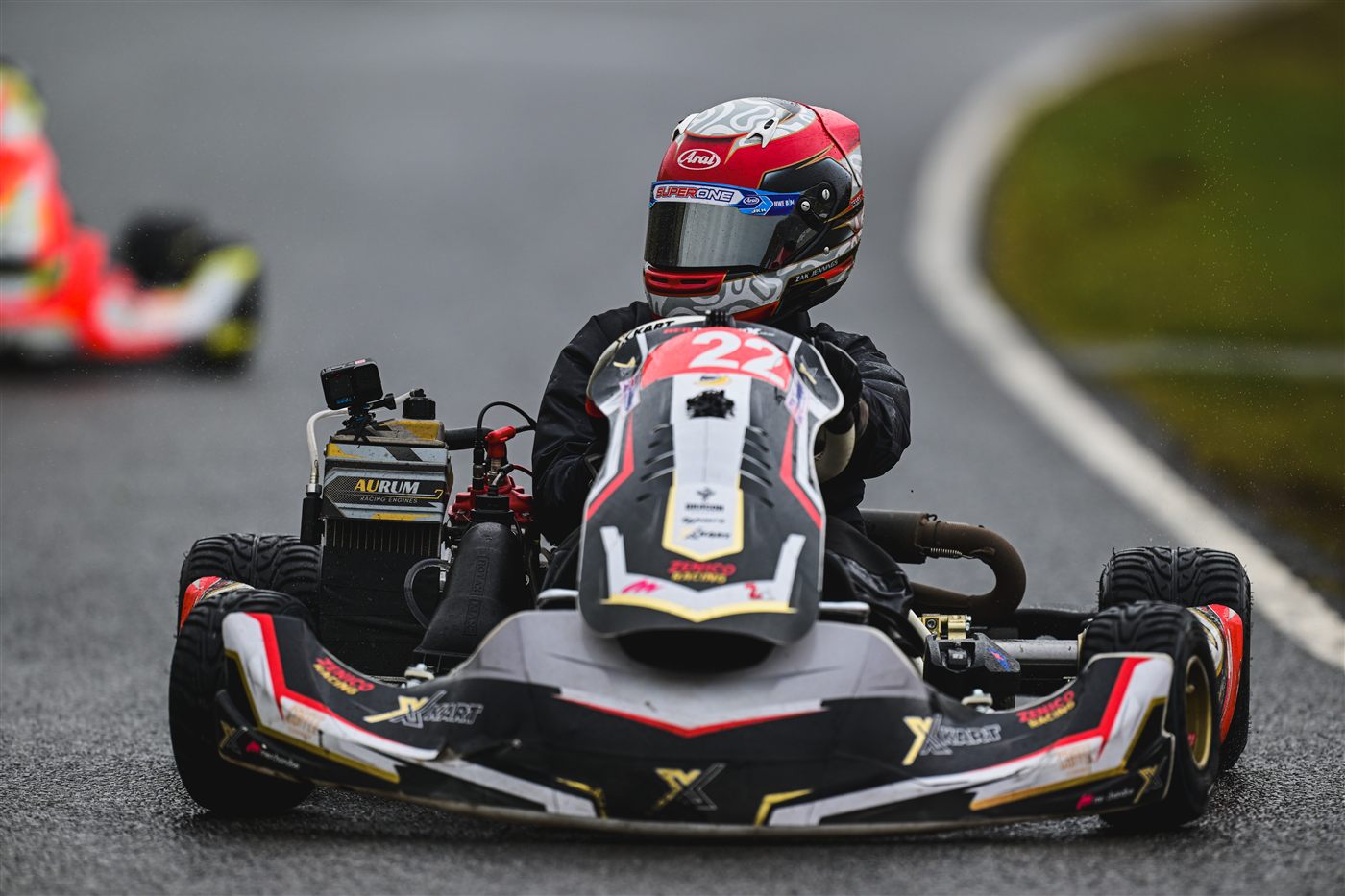
We've done it both ways, many times over. Zak started out as a privateer in a Honda Cadet at Bayford Meadows, with Dad as the (very) amateur mechanic, a gazebo, a toolbox and a lot of guesswork. Since then we've raced with a number of teams: Project One, Blueberry Motorsport, LMM Motorsport (our first national season, in the UKC), Clark Motorsport, HPM Motorsport, TWM (Tim Wilson Motorsport) for pre-round testing when we needed it, and, as we moved into national championships, X-Kart, a national-level team with professional mechanics, structured coaching and high-performance equipment.
Every team was different: different set-ups, different ways of working, different prices, and different ways of treating the families in their awning. That's a big part of why we wanted to write this.
Neither way is "right". They're different ways of going racing, and the best choice depends on your budget, your time, your child's ambitions and, honestly, how much you enjoy the spannering.
Here's what we've learned.
What does "privateer" mean?
A privateer, or independent, is a family that runs its own show. You own the kart and the engines. You transport everything to the track, set up your own gazebo or awning, prepare the kart, fix it when it breaks, and work out the set-up yourself, usually with a lot of help from friendly families in the paddock.
Many drivers start out this way, and plenty stay privateers for their whole karting career. There have even been championships built around it. The Independent Privateers Kart Championship (IPKC) didn't allow karting teams at all, which kept the playing field level and the atmosphere family-friendly. It was a great series, but sadly it folded in 2025 due to a lack of entries. It didn't get the support it deserved.
What does "running with a team" mean?
With a team, you pay a third party to prepare and run your kart for you, or with you. It isn't one fixed thing. Team support covers a whole range, from simply renting tent space on race day to full arrive-and-drive with everything done for you.
Depending on the team and the package, it can include:
- A place in the awning, with covered space, power and somewhere warm and dry between sessions.
- Mechanics to prepare the kart, change set-up and fix damage.
- Driver coaching trackside, often from experienced or current racers.
- Data analysis, comparing your driver's laps with their team-mates' to find where the time is.
- Set-up guidance for the track, the tyres and the conditions.
- Kart storage and transport, so the kart is waiting for you at the track.
- Spares on hand, which matters a lot when something breaks at 8am on race day.
- Test days and team practice sessions.
- A pathway: contacts, scholarships, sponsorship help, and advice on the next step.
X-Kart, for example, describes its team as offering access to race-spec equipment, personalised coaching and mentoring from experienced coaches and mechanics, exclusive test sessions and practice races, networking, and help mapping a driver's journey, including the move to cars.
The cost difference
This is the big one. There is no single price, because every team and every class is different, but these rough ranges from Midland Karting give a realistic picture of a UK race weekend:
| Per race weekend | Privateer | With a team |
|---|---|---|
| Entry / team fees | £60 to £160 entry | £300 to £1,200 team fees (plus entry) |
| Mechanic | You (free, but not always cheap!) | £120 to £200 a day, if not included |
| Tyres | £150 to £200 | £150 to £200 |
| Fuel, oil & consumables | £55 to £130 | £30 to £80 |
| Maintenance / prep | £20 to £100 | £100 to £300 |
| Travel, food & hotels | £40 to £200 | £60 to £250 |
| Damage | £50 to £100 | £50 to £300+ |
| Typical total | £375 to £890 | £700 to £2,200+ |
Source: Midland Karting, The Real Costs of Owner Karting Over a Race Weekend. Your costs will vary with class, championship and team.
For a real example, Mike, one of the parents who shared his family's story with us, found that at cadet level with a team it cost around £800 per round for a place in the awning and manufacturer support, with two days in the awning at around £500 plus fuel and entry fees, on top of a kart costing around £6,000.
Multiply any of those by a full season of rounds, add test days, and the gap between privateer and team can easily run into thousands of pounds a year.
Our own numbers: the "ish" principle
Here's what we've seen in the paddock at national level. Every team prices differently, so treat these as "ish":
| Team extras | Roughly |
|---|---|
| Awning space | £100 to £160 |
| Mechanic | £100 to £250 per day |
| Engine hire (full package) | Around £220 per day |
| Kart hire | Around £200 per day (ish) |
| Team total | Around £2,000 (ish) per weekend |
| Add race fees, tyres and damage | £3,000+ per weekend |
You can bring that down a lot by learning to be your own mechanic and owning your own kit. That comes with its own risks, but it's how most families make the budget work.
Beware of being a "walking wallet"
Most teams are run by genuine karting people. But be aware that some see new families as a walking wallet: once you're skint, the next parent walks in. Be wary if you hear lines like these:
- "Your kid is really fast, we'd love them to join the team."
- "We only have limited space, act fast."
- "Great potential, let us work with them and make them a champion."
- "We've seen you on social media, they look really good, come and join us."
And if you ask "How much is it?" and the answer is "What do you want?", get a written price for exactly what's included before you agree to anything.
The case for going it alone
- It costs less. Often much less, which can mean more seat time for the same money. And seat time is everything.
- You learn a huge amount. Parents become mechanics, and drivers learn how their kart works and why it behaves the way it does.
- It's proper family time. Some of our best memories are from those early privateer days: loading the car, fixing things that shouldn't have broken, and working it out together.
- You're in control. Test when you want, where you want, and make your own decisions.
- The paddock will help you. Most privateer families are incredibly generous with advice and even spare parts.
The downsides are real, though. Set-up is often guesswork, and Sunday morning problems are yours. There's a lot of learning by trial and error. You need your own transport, trolley, tools, gazebo and spares. Things will go wrong at the worst moment, and there's nobody whose job it is to fix them except you. And at national level, you may be up against drivers with a full team, coaching and data behind them.
The case for a team
- Expertise on tap. Mechanics and coaches who know the track, the tyres and the class inside out.
- Data and coaching. Seeing exactly where your driver is losing time compared with team-mates is one of the fastest ways to improve.
- Less stress for parents. Kart prep, spares and logistics are handled, so you can actually watch your child race.
- The kart is ready when you arrive. Mike found this worked really well for his family: they turn up, the kart is there and prepared, and experts are on hand if something big goes wrong.
- A pathway. Good teams have contacts, run scholarships and can advise on the next step, whether that's a new class, a national championship or cars.
And the downsides: it costs far more. You have less control over set-up and testing. If you can't transport the kart yourself, you may not be able to go testing whenever you like. And it's easy to slip into feeling like a customer rather than part of the team.
The middle ground
It doesn't have to be all or nothing. Plenty of families mix and match:
- Tent space only. Rent a space in a team's awning, but prepare the kart yourself.
- A mechanic for the day. Hire help for race weekends, and run yourself at test days.
- Coaching days. Stay privateer, but book a coach for the odd session to find the time you're missing.
- Privateer at club, team at nationals. Learn your trade cheaply at your home track, then get support for the bigger events.
- A team test day first. Many teams offer a trial day in one of their karts, which is a great way to find out if team racing (and the class) suits you before you commit.
Questions to ask before you sign with a team
What exactly is included, in writing?
Awning space, mechanic, coaching, data, storage, transport? Get it written down, with a proper invoice.
How many drivers per mechanic?
One mechanic looking after two drivers is very different from one looking after six.
What costs extra?
Tyres, fuel, engine rebuilds or engine hire, entry fees, test days, and especially damage. Ask how damage is charged.
Are coaching and debriefs included?
Or are they an add-on? Will your driver get proper feedback and a data debrief after every session?
Can we speak to other families?
Ask for references from mid-grid families, not just the winners. They'll tell you how the team treats drivers who aren't at the front.
Can we try a weekend first, and how long is the commitment?
A trial test day tells you more than any sales pitch. And is it one round, a championship or a full season? What happens if you need to stop?
So which is right for you?
If your child is new to owner karting, racing at club level, or you're on a tight budget, being a privateer is a brilliant way to learn, and you'll get far more seat time for your money. Our guide to starting racing and Gareth's privateer Bambino advice are good places to start.
If you're moving into national championships, into a more complex class like Rotax, you're short on time, or you want structured coaching and a pathway, a team can make a real difference. Just go in with your eyes open about the cost.
Whichever route you choose, the same things matter most: seat time, a supportive family around the driver, and keeping it fun.
We've been a privateer family and we've been in seven different teams' awnings. Every one gave Zak something different, and taught us something too. If you're wrestling with the decision, come and find us in the paddock, or at KartMania. We're always happy to chat.
Sources: Midland Karting, X-Kart, Start Karting: choosing a team, KartSport News: choosing a race team, and parents who've shared their stories with us.