
Where it started
We got our son Sebastian into karting when he had just turned 6. I had no karting experience before, apart from a few corporate races at Teesside and TeamSport. Looking back, it's been a rollercoaster. We've felt every emotion you can think of: ups, downs, elation, sadness, fear and anger, to name a few. But I wouldn't change it, because it's been brilliant.
We started Sebastian on two taster days with Total Kart Zero (TKZ), run by Rob Smedley. For those who don't know, these are electric karts. The first day was learning the basics and getting gradually quicker, then on the second day they raced. In his very first race he was put at the back of the grid because he'd shown good pace. He spun at the first corner going for a gap and was last by some way, but finished 2nd with the fastest lap.
After some research and joining some karting groups on Facebook, my wife and I decided to get him his own kart, as carrying on with TKZ was astronomically expensive compared to owning one.
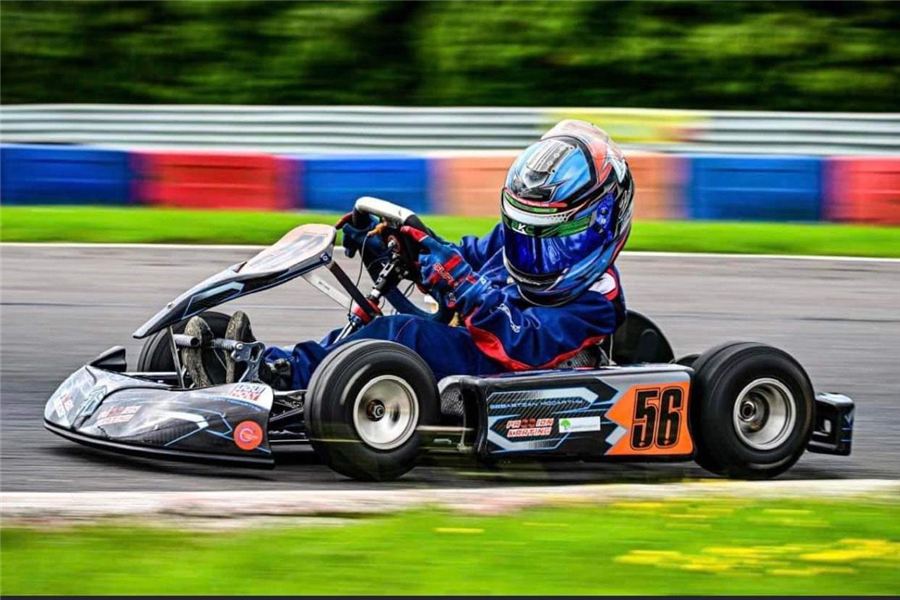
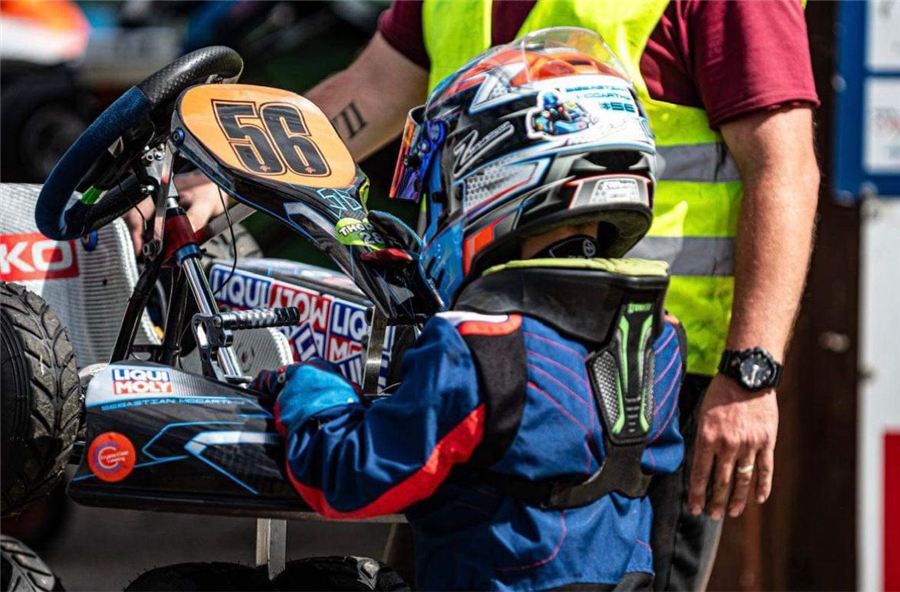
We went for Comer C50, a 2-stroke engine with around 4bhp and a top speed of 40 to 45mph, because our local tracks had good numbers in that class. We bought his first kart and engine locally from a Facebook group and gave it to him for Christmas.
I remember our first practice day at Teesside. We turned up with the kart crammed in the back of my BMW, with minimal tools, no spares and some fuel and oil. I honestly didn't have a clue what I was doing. Luckily an old school friend had his son in the same class, which was a godsend.
After a few practice days, other parents were coming over to help, and even on day one I learned so much. Eighteen months on, I'm still learning about set-up and engines. It's a constant learning curve.
Bambino and Comer C50 advice
- Start with a cheap chassis (I'd recommend a Wright) and an old blue tag engine.
- Try to buy a package that includes some spares.
- Get your driver out at your local tracks as much as possible. Seat time is everything. We spent the first 3 months at Teesside nearly every Saturday and Sunday.
- Buy spares as you go, and watch the Facebook groups for anything you need. Zip North is great for parts.
- Talk to other parents in the same class and soak up everything they tell you. Parents and helpers are very friendly and will help as much as they can, even giving you spare parts.
- These engines are temperamental. Learning how they behave, how to maintain them and how to stop them going wrong is key. They can start fine, then refuse to start 10 minutes later. A new spark plug usually sorts it, but it's frustrating!
- Get a set of pinned jets. Start with a 57 or 58 and try one size up or down to see which is better. I could write another page on jetting, but that's a good starting point.
- Clean the carburettor with brake cleaner after every session. A tiny speck of dirt can make these engines run terribly.
- Use Kastor M 2-stroke oil. As a rule, 60 to 70ml per litre on a warm day and 70 to 80ml on a cold day. Mix the fuel and oil well before filling the tank, and throw away old fuel left in the tank after each day.
- Warm the engine up on the kart trolley before sending your driver out. If you have a lap timer with a temperature sensor, get it to 70 degrees, but don't over-rev it.
- Use chain lube before every session on the chain and rear axle bearings to keep the axle as free as possible. (Tri-Flow is the best.)
- Keep the chain loose, not tight, and aligned with the clutch teeth, or you'll ruin the sprocket and chain. Comer Bambino uses a fixed 80-tooth rear sprocket.
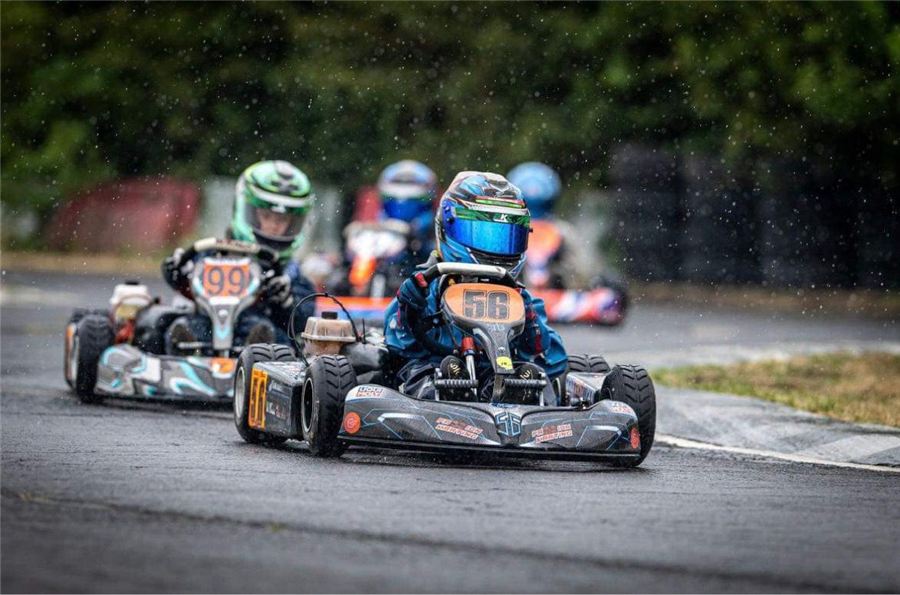
- Tyre pressures: in the dry I run 18 to 22psi front and 20 to 25psi rear. In the wet, 30 to 35psi front and 35 to 40psi rear.
- Comer Bambino uses Le Cont all-weather tyres. Use worn sets in the dry, with at least 1mm of tread on the front and 2mm on the rear. In the wet, use the newest set you have for more grip.
- Clean the kart regularly with a rag. As they say, a clean kart is a fast kart.
What I've learned
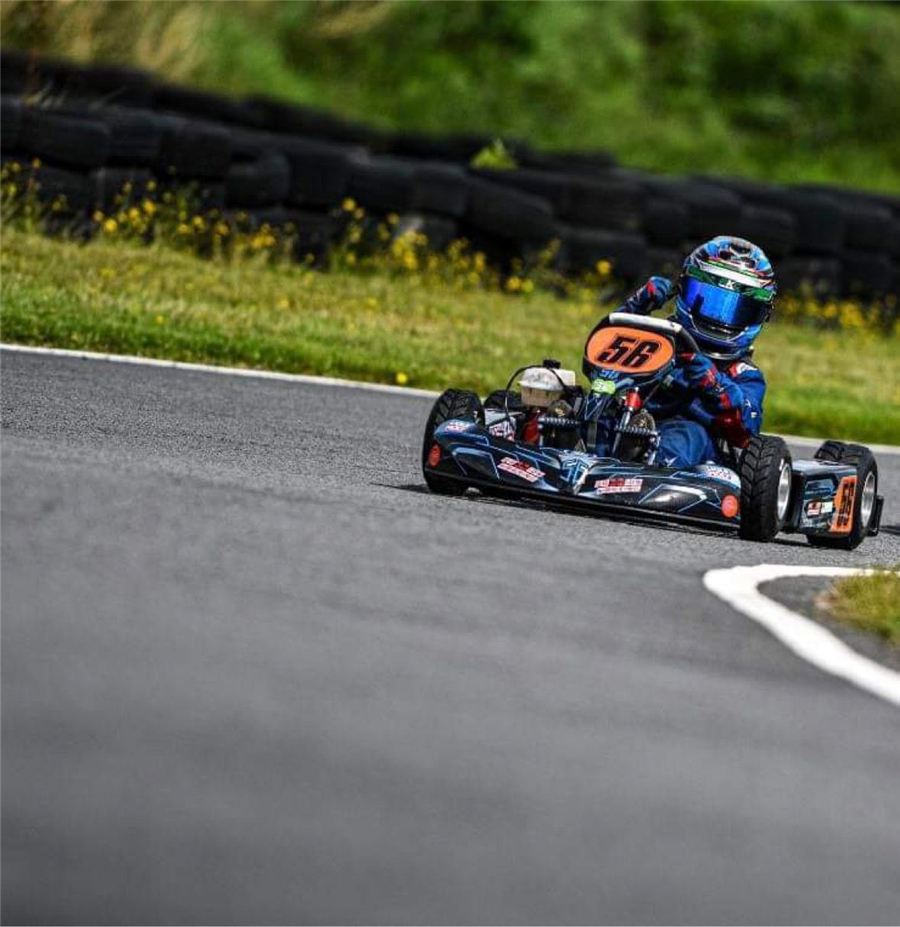
Karting is very competitive and a lot of money gets thrown about. My biggest advice is to give your driver time to learn. They're very young and can be doing 40mph. Don't be harsh on them. Be as supportive as you can and, most importantly, keep it fun! As soon as they're not having fun, take a step back.
Don't burn your driver out. Overdoing it will drain their love of the sport. Get to know the most helpful people in the paddock. You don't know what you don't know, so don't be afraid to ask, even if it seems silly.
Not every parent is helpful. I've been abused in my own awning, in front of my son, because he overtook a more experienced driver who then spun. Be wary of jealous parents. And once your driver starts winning, be ready for accusations. We were accused of using someone else's engine when Sebastian won from the back of the grid. (Sorry, but my son is just a good driver!) Cheating does happen. Some get caught and some don't. Just do everything properly and by the rules, and have fun with your driver.
Why we do it
Karting has been the best thing we've done. I get to spend quality time with my son and my wife doing something we all love, and to give him the opportunity I never had, even if it means giving up luxuries ourselves.
Sebastian is an absolute rock star and my hero. What he does in a kart is amazing, and watching him compete against the best drivers in the UK is special. We've made some of the best friends we've ever had through karting. They're the nicest, most genuine families, and the kids are all best friends, making their own memories, which is priceless.
What next?
Sebastian was due to move up as he'd be too old for Bambino in 2024. We were deciding between Honda Cadet 200 and Micro Max, and planned to test him in both over the close season.
Good luck!
Gareth and Sebastian